Comprehensive Evaluation of the Mpeg File Outline Icon Pack
In the realm of digital design and user interface creation, the selection of appropriate assets is a critical decision that impacts workflow efficiency, visual consistency, and final product quality. The Mpeg File Outline Icon pack presents itself as a versatile solution for developers and designers working across multiple platforms. This article provides a balanced evaluation of this specific icon set, exploring its features, ideal applications, and potential limitations to help you determine if it aligns with your project requirements.
Understanding the Asset and Its Core Offerings
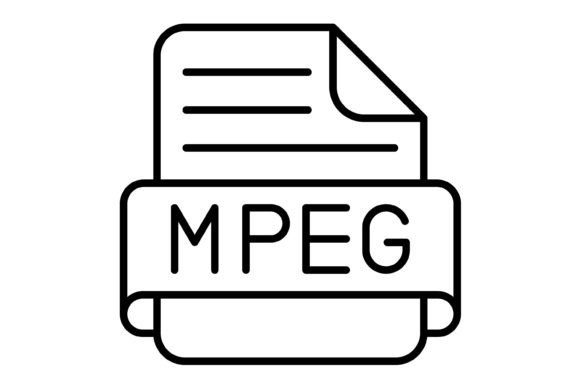
At its foundation, this product is a collection of vector-based icons representing the MPEG file format, a standard for audio and video compression. The term "outline" refers to a specific visual style where icons are rendered using strokes and lines rather than solid fills, often resulting in a cleaner, more modern aesthetic that is popular in contemporary interface design. The package is delivered as a Zip file containing the icons in five distinct file formats: AI, EPS, JPG, PNG with a transparent background, and SVG. This format diversity is a significant consideration for any potential user, as it dictates compatibility with various software and use cases.
The stated features of the pack include suitability for mobile apps, websites, print materials, presentations, illustrations, and templates. It claims readiness for all devices and platforms, with each icon designed for maximum usability. The collection comprises 100 vector icons, emphasizing ease of editing and scaling. These claims point toward a resource intended for broad, practical application rather than niche, single-use scenarios.
Evaluating the Benefits and Practical Advantages
The primary benefit of this icon pack lies in its format flexibility. The inclusion of vector formats like AI, EPS, and SVG is crucial for projects requiring scalability without loss of quality. SVG, in particular, is the standard for web and mobile interfaces due to its small file size and crisp rendering at any resolution. The presence of raster formats like JPG and PNG (with transparency) offers immediate usability for presentations, documents, and graphic design where vector editing software is not available. The transparent PNG is especially valuable for layering icons over various backgrounds seamlessly.
The focus on an outline style aligns with current design trends that favor minimalism and clarity. Such icons tend to maintain legibility at smaller sizes, which is essential for mobile app toolbars and website navigation elements. The claim of being "ready to use for all devices and platforms" suggests the icons have been optimized for consistent rendering across different operating systems and screen densities, a non-trivial task that saves developers significant time in asset preparation.
Furthermore, the promise of being easy to edit and scale is a key advantage for designers who need to customize icons to match a specific brand color palette or adjust line weights. Vector formats inherently allow for this, but the ease of editing depends on the organization of the files (e.g., use of layers, compound paths). A well-structured vector file is far more valuable than a complex, uneditable one.
Considering the Tradeoffs and Key Decision Factors
While the feature list appears comprehensive, a prudent evaluation requires examining the tradeoffs and underlying considerations. The first major factor is specificity versus breadth. The pack contains 100 icons, but the description centers on the "Mpeg File" icon. Prospective buyers must investigate the full icon set to determine if the other 99 icons are relevant to their domain. A pack rich in media, file, and software-related icons would be ideal for a multimedia application, but less useful for an e-commerce or fitness app. The value is not just in the number of icons, but in their thematic relevance to your project.
The quality and consistency of the design are paramount. An icon set is only as good as its weakest member. "Maximum usability" implies adherence to established design principles: consistent stroke width, alignment to pixel grids for crisp rendering, and clear metaphors that are easily understood by users. It is advisable to preview a sample of icons from the pack to assess their visual harmony and intuitive nature. Do they look like they belong to the same family? Are they overly stylized or appropriately generic?
Another consideration is the licensing model. The description does not specify whether the icons are offered under a royalty-free license for unlimited use, or if there are restrictions on the number of end products, projects, or users. For commercial work, especially in templates or products for resale, understanding the license is a critical legal and financial step before acquisition.
Scenarios for Strong Fit and Alternative Considerations
This icon pack is likely a strong fit for professionals involved in cross-platform development. If you are building an application that needs to run on iOS, Android, and the web, having a single source for icons in SVG (for web and modern apps) and potentially AI/EPS (for source editing) streamlines the design-to-development handoff. It is also well-suited for UI/UX designers creating wireframes and prototypes, as the outline style is neutral and easy to incorporate into mockups. Content creators preparing presentations, reports, or educational materials will find the JPG and PNG formats immediately useful for enhancing visual communication without technical overhead.
However, alternatives may be worth considering in specific situations. If your project requires a filled or glyph icon style for a more tactile or traditional interface, this outline set would not be appropriate. If you need an extremely large and diverse library covering thousands of concepts across all industries, a subscription to a massive icon service might offer better value. Furthermore, if your team operates exclusively within the Adobe ecosystem and prefers working with .PSD or .AI files with live effects and symbols, a pack that does not include those specific source file types might create extra conversion work.
Conclusion: Aligning the Asset with Your Goals
The decision to integrate the Mpeg File Outline Icon pack into your workflow hinges on a clear alignment between its offerings and your project's specific needs. Its strengths are its multi-format delivery, scalable vector foundation, and a modern outline style conducive to cross-platform use. It is a practical resource for designers and developers who value flexibility and need assets that can move seamlessly from design software to code.
To make an informed decision, take the following steps: First, verify the complete set of 100 icons to ensure they cover the visual vocabulary required for your interface or project. Second, examine sample files to judge the quality of the vector paths and the consistency of the design. Third, review the license agreement to confirm it permits your intended use case. If the icons are thematically relevant, technically sound, and legally suitable, this pack represents a coherent and efficient solution for incorporating scalable, professional iconography into your digital and print projects.